
Can AI Bring Old Photographs Back to Life?
Artificial Intelligence, or AI, has become one of the biggest talking points in technology over the last couple of years. Depending on who you ask, it's either an exciting glimpse into the future or something that's causing understandable concern.
Many people have mixed feelings about AI, and with good reason. Tools that can generate artwork, music, videos and writing from scratch have raised difficult questions about creativity, copyright and the future of many creative industries. These conversations are important, and I don't think there's a simple right or wrong answer.
But like most technology, I believe AI is simply a tool. And just like any tool, what matters is how it's used.
One area where I think AI can genuinely make a positive difference is restoring old photographs.
Giving Memories a Second Chance
Many of us have a box tucked away somewhere containing old family photographs. Some have faded over time, others have scratches, creases or tears, and some were simply taken on cameras that weren't capable of capturing the detail we'd expect today.
In the past, restoring these photographs was often a slow and expensive process requiring specialist software and many hours of careful editing.
Today, AI can do much of the heavy lifting.
It can intelligently sharpen blurry images, reduce visible damage, improve faded colours and even recreate missing details in a surprisingly natural way. It's certainly not perfect, and sometimes it still needs a human touch, but the results can be remarkable.
Most importantly, it allows treasured memories to be enjoyed again by future generations.
A Piece of Family History
Recently I had the opportunity to restore a number of old family photographs, including several taken during my stepdad's time serving in the Royal Navy.
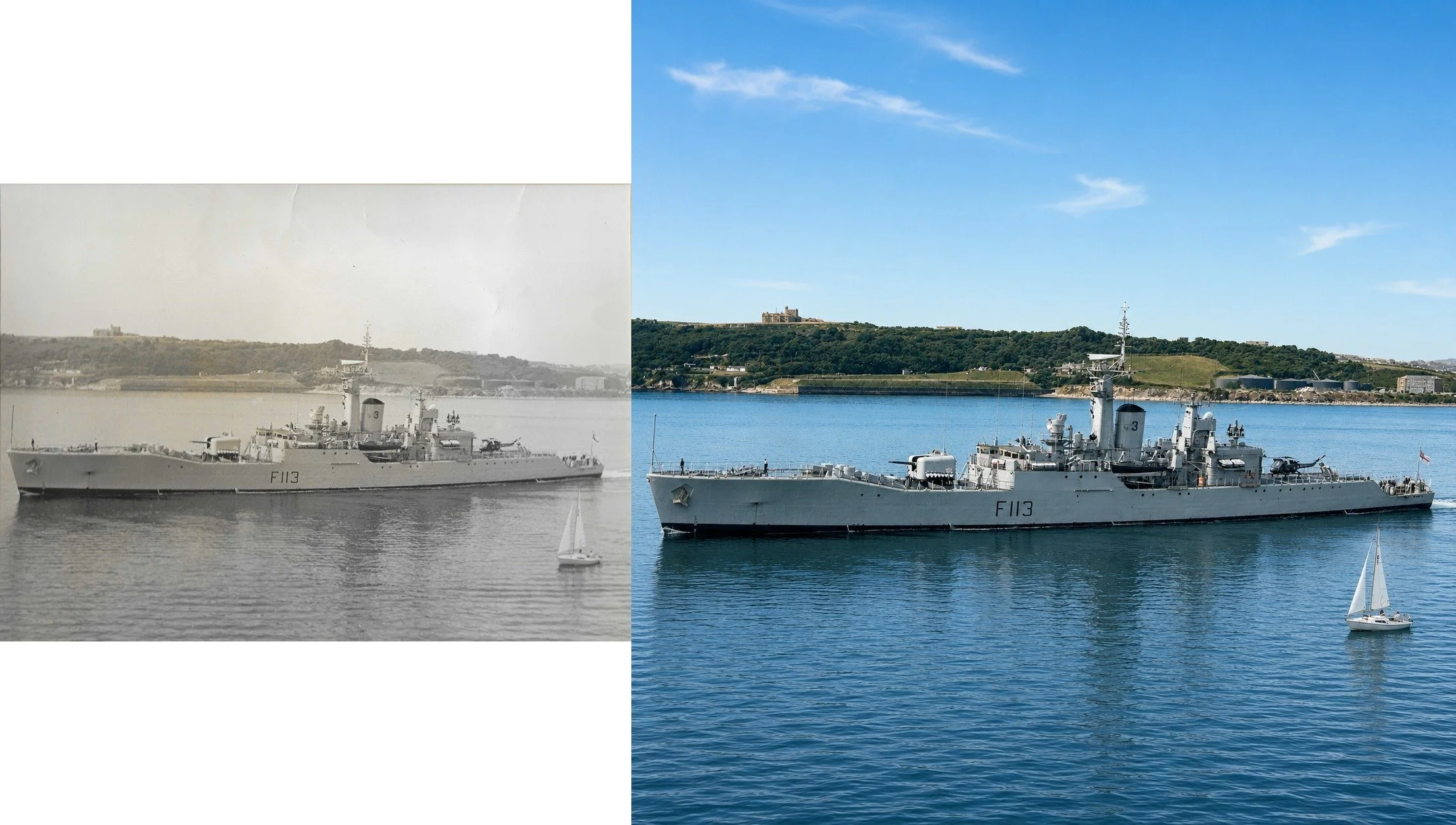
The original image of the HMS Falmouth on the left, and the colourised, enhanced version on the right.
One photograph showed HMS Falmouth, a Rothesay-class frigate commissioned in 1960. During her service she undertook patrols around the world before eventually being decommissioned in the late 1970s.
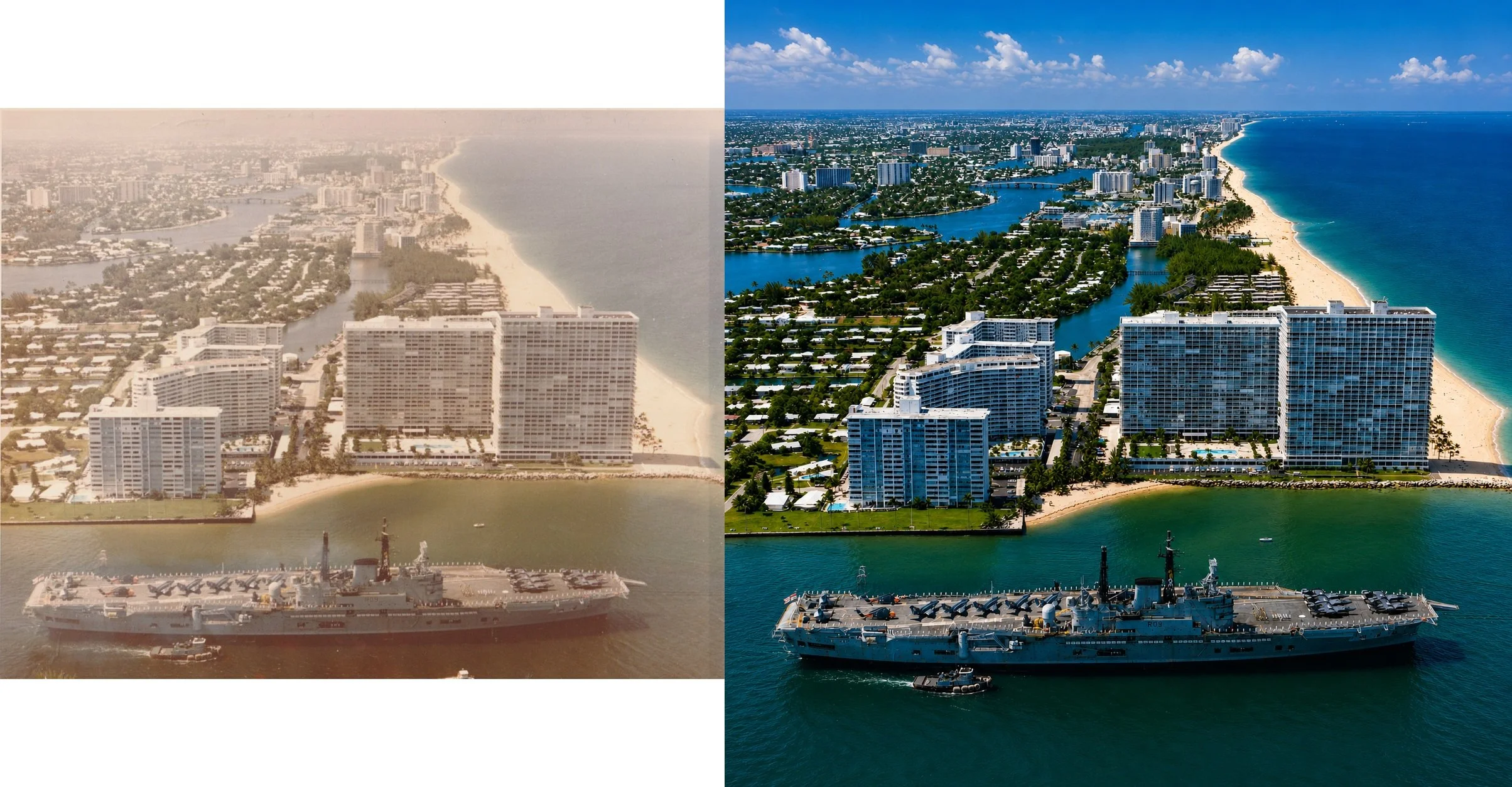
The original image of the HMS Ark Royal on the left, and the colourised, enhanced version on the right.
Another photograph featured HMS Ark Royal, one of Britain's most famous aircraft carriers. She served as the Royal Navy's flagship during the 1960s and 70s and became well known for operating the iconic Blackburn Buccaneer strike aircraft and the mighty Phantom FG.1 fighter.
Like many photographs from that era, both images had faded considerably over the years. Using modern restoration tools, I was able to bring back much of the lost clarity and detail while still preserving the character of the original photographs.
Seeing decades-old memories become clear again was incredibly rewarding.
Technology at Its Best
This is one of those situations where technology quietly improves everyday life.
It's not replacing an artist or creating something that never existed.
It's helping to preserve something that already exists and matters – whether that's an old family portrait, or a wedding photograph, or a picture of a beloved pet or a relative who's no longer with us.
Those photographs are irreplaceable, and giving them a new lease of life can be incredibly special.
I'd Be Happy to Help
If you have a collection of old photographs sitting in a drawer or a family album that have seen better days, I'd be more than happy to see what can be done.
Whether they're faded, scratched, blurry or simply showing their age, modern restoration techniques can often produce results that would have seemed impossible just a few years ago.
If you'd like to preserve your family memories for years to come, feel free to get in touch.